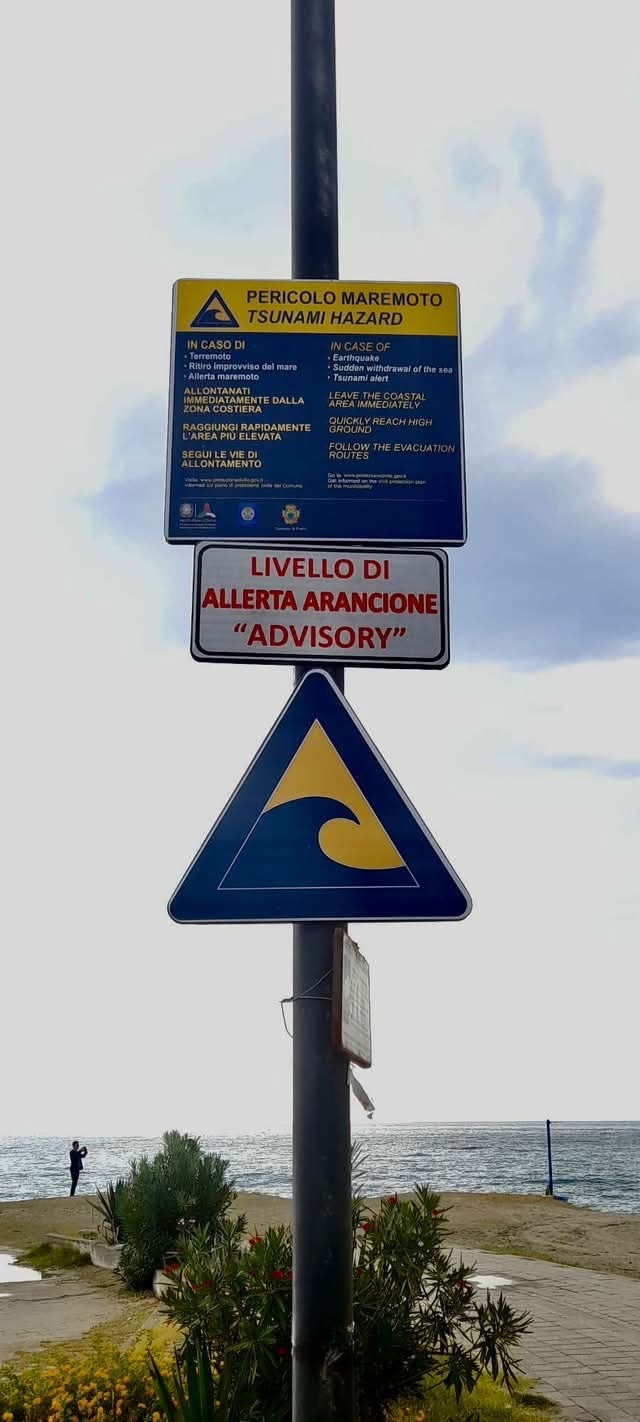
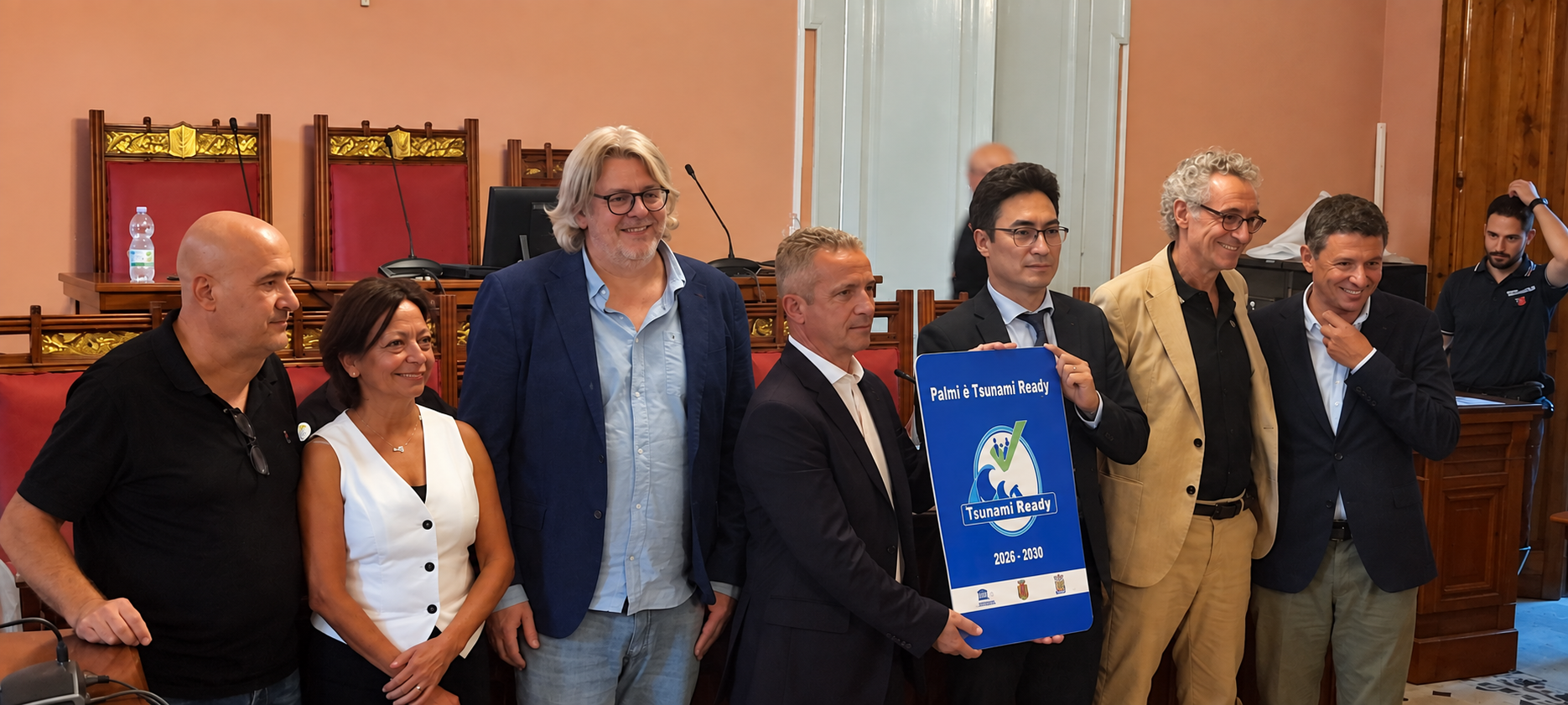
Palmi, in the province of Reggio Calabria (Italy) is Tsunami Ready.
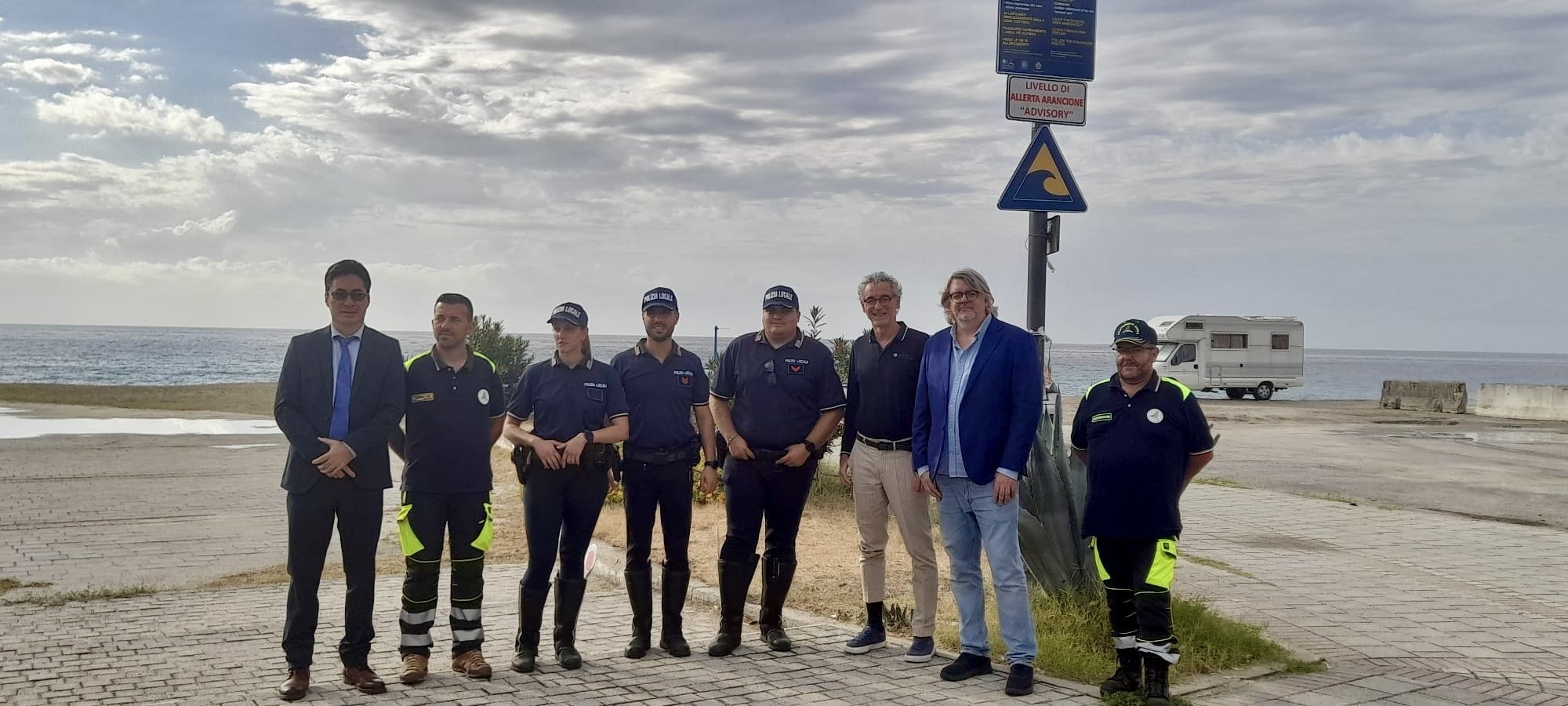
On the afternoon of Saturday 12 September 2026, the recognition ceremony took place in the presence of Giovanni Calabria, Mayor of Palmi; Salvatore Celi, Deputy Mayor; Daniele Trimboli, President of the Palmi Youth Council; and Francesco Managò, Commander of the Local Police. The ceremony was attended by representatives from the Tsunami Alert Centre (CAT) of the National Institute of Geophysics and Volcanology (INGV), the Department of Civil Protection (DPC) and the Higher Institute for Environmental Protection and Research (ISPRA). The recognition was given by Denis Chang Seng, Secretary of the IOC-UNESCO for the NEAMTWS area – the Tsunami Warning and Mitigation System for the North-East Atlantic, the Mediterranean and Connected Seas.
What is UNESCO’s ‘Tsunami Ready’ programme?
‘Tsunami Ready’ is a voluntary accreditation programme aimed at local communities, designed to promote preparedness for tsunami risks through collaboration between organisations responsible for emergency management, local authorities and citizens. The programme’s main objective is to improve public safety before, during and after a tsunami emergency, by strengthening the capacity of coastal communities to recognise the risk, receive alerts promptly and adopt appropriate behaviour.
The program is based on a set of twelve indicators covering various aspects of risk preparedness: from knowledge of potentially exposed areas to the definition of warning procedures, from the establishment of response procedures to information and awareness-raising activities aimed at the public. Overall, the programme thus promotes collaboration between the institutional level, the bodies responsible for emergency management and the local community, with particular attention to the ability to effectively reach citizens.
Why Palmi’s accreditation is strategic for Calabria’s coastal municipalities?
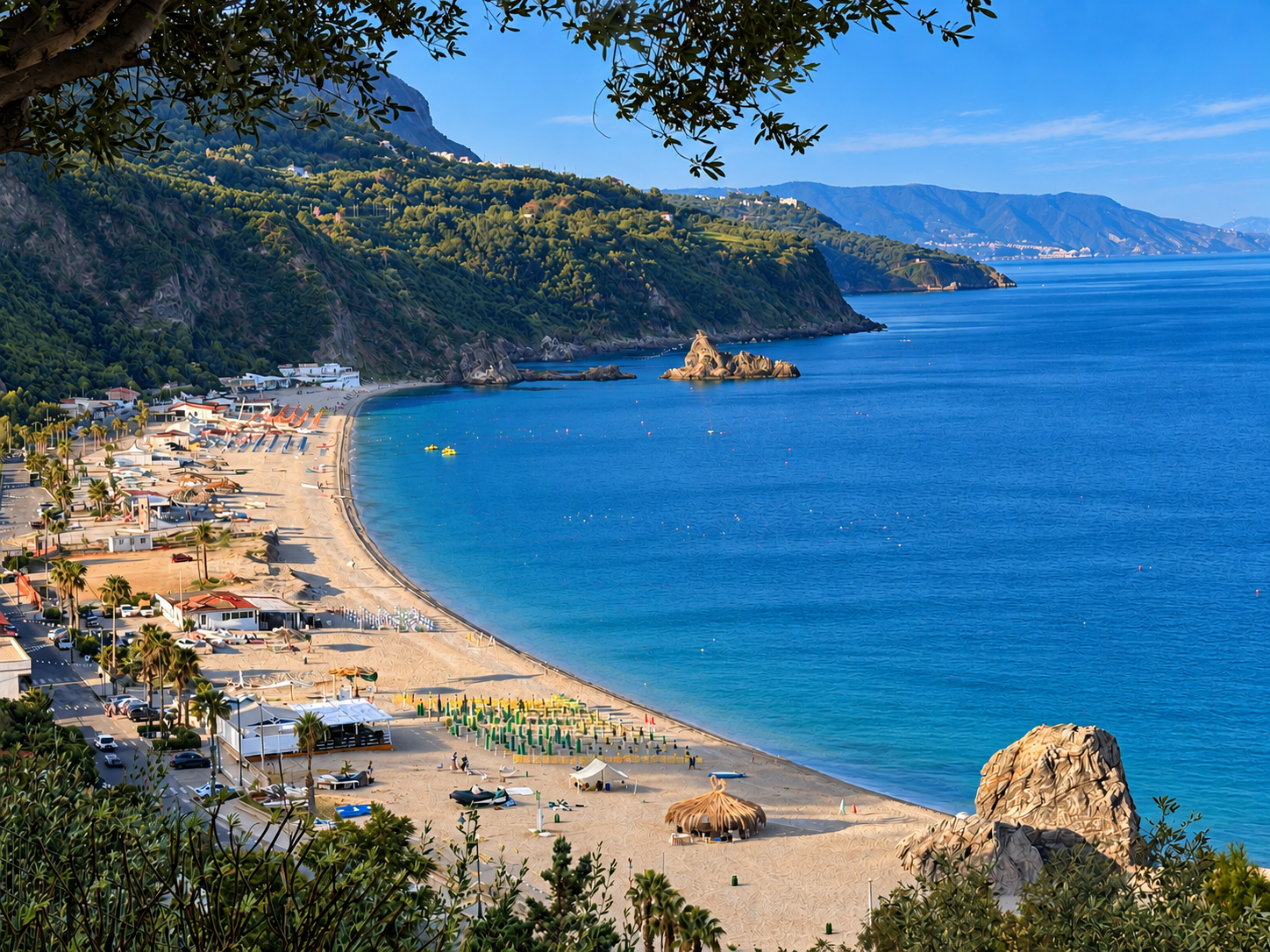
The approach adopted by the Municipality of Palmi is particularly significant given the characteristics of the area. Situated along the Tyrrhenian coast of Calabria, Palmi is in fact located in an area of medium-to-high tsunami risk and has, throughout its history, been affected by tsunamis, as documented by the INGV’s Italian Tsunami Effects Database (ITED). Participation in the programme therefore takes place within a context in which awareness of the risk and the preparedness of the population are key elements in strengthening the community’s response capacity.
Within the programme developed in Palmi, one activity stands out in particular: it was carried out for the first time within the NEAMTWS framework, prior to the municipality’s accreditation as ‘Tsunami Ready’. A survey was conducted on the population’s perception of tsunami risk, with the aim of obtaining an initial assessment of knowledge, awareness and perception of risk in the area.
In 2026, Palmi was also identified as a target location for the CoastWAVE 2 project – funded by the European Commission through DG ECHO (European Civil Protection) for the years 2025–2026 – aimed at strengthening the resilience of coastal communities in the Mediterranean and the north-east Atlantic to tsunamis and other sea-level-related risks. A detailed study of bathymetry, the shape of the coastline and the natural features that may influence the local propagation of a tsunami has made it possible to identify the most exposed areas and to develop specific evacuation routes from the coast to assembly points. The results of this work are available on the Tsunami Alert Centre’s website.
Public perception of tsunami risk
The availability of this data has been, and continues to be, a further tool to support community preparedness efforts. The continued use of the same survey tool over the years will, in fact, make it possible to compare results over time and to observe any changes in the population’s perception and understanding of the risk. It will thus also be possible to assess the effectiveness of the information, communication and preparedness initiatives carried out locally as part of the Tsunami Ready programme, complementing operational indicators with a measure of the evolution of community awareness.
The approach adopted by the Municipality of Palmi therefore constitutes an example of collaboration between institutions, operational bodies and the local community, aimed at reducing the risk of tsunamis. The ‘Tsunami Ready’ accreditation is not an end in itself, but a stage in a process that requires ongoing preparedness, information and monitoring. Each indicator achieved, together with the ability to measure changes in risk perception over time, helps to strengthen the community’s capacity to understand the danger and respond to a potential emergency in an increasingly informed manner. In this context, the events of last winter are particularly significant: Cyclone Ulrike caused severe damage to Palmi’s seafront, which still bears the marks of the impact of that event today. Although these phenomena differ in origin and characteristics, experiences of this kind help to make awareness of the dangers posed by the sea more tangible. From this perspective too, the Tsunami Ready programme can contribute, within its remit, to fostering greater awareness of coastal risks over time – a particularly pressing need in the Mediterranean context, where extreme events and phenomena of marine origin can affect territories, infrastructure and communities along extensive stretches of coastline.