

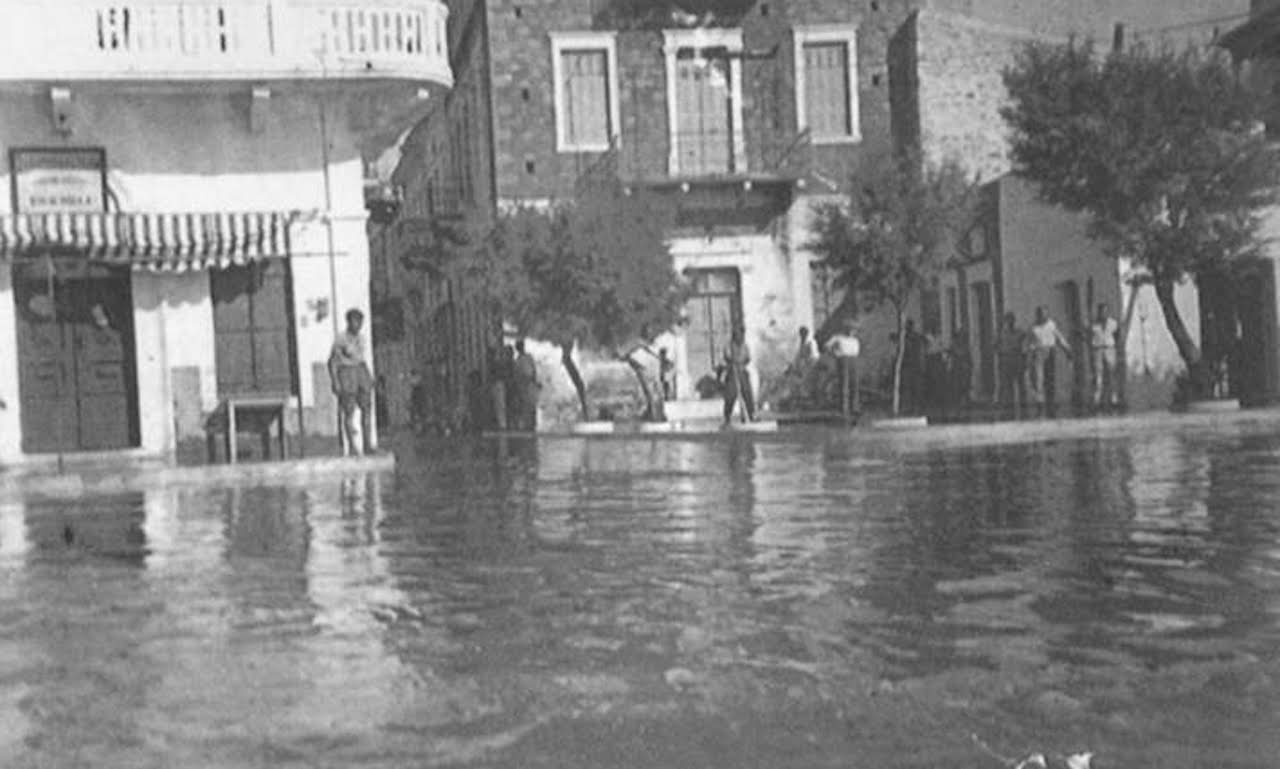
Today marks the 70th anniversary of the earthquake and tsunami that hit Amorgos, the Cyclades, and large areas of the Aegean Sea on July 9, 1956. It was one of the most devastating events in 20th-century Greece: the quake occurred at 5:11 a.m. local time and was followed by tsunami waves that reached many coasts in Greece and Turkey.
The tsunami reached run-up (wave heights reached on the coast) of up to 20 meters in some coastal locations. The hardest-hit island was Amorgos, the easternmost of the Cyclades, where the waves caused extensive damage.
A new study published by researchers at the National Observatory of Athens (NOA) has provided new details on the Amorgos fault (Kalligeris et al., 2025). The research suggests that the earthquake displaced the seafloor along the fault to a much greater extent than previously assumed. According to the study, this seafloor displacement was likely the primary cause of the 1956 tsunami. Previously, a significant portion of the waves had been attributed to underwater landslides triggered by the quake; however, the new calculations show that seafloor displacement can account for much of the wave heights observed along the coasts, with possible local effects related to landslides in certain areas.
In 2003, several eyewitness accounts were collected and later published in the 2009 study by Okal et al. Among these were those of two retired shepherds who, on the day of the earthquake and tsunami, were in Mouros on the island of Amorgos. The two men, who were 33 and 18 years old at the time, recounted the event in detail: “A few minutes after the tremor, the sea receded dramatically, exposing the seabed, and then returned with unprecedented force.” In fact, some of the highest run-ups were recorded in Mouros, with waves exceeding 20 meters in height.
The earthquake and tsunami caused 53 confirmed deaths, over 100 injuries, and widespread damage to homes, ports, roads, and coastal businesses. Santorini, located near the epicenter, suffered widespread building collapses and severe damage to its settlements. Seventy years later, this anniversary draws attention to the importance of preserving the historical memory of events that could happen again, in a context that is—today—more exposed to human presence and human activities.