

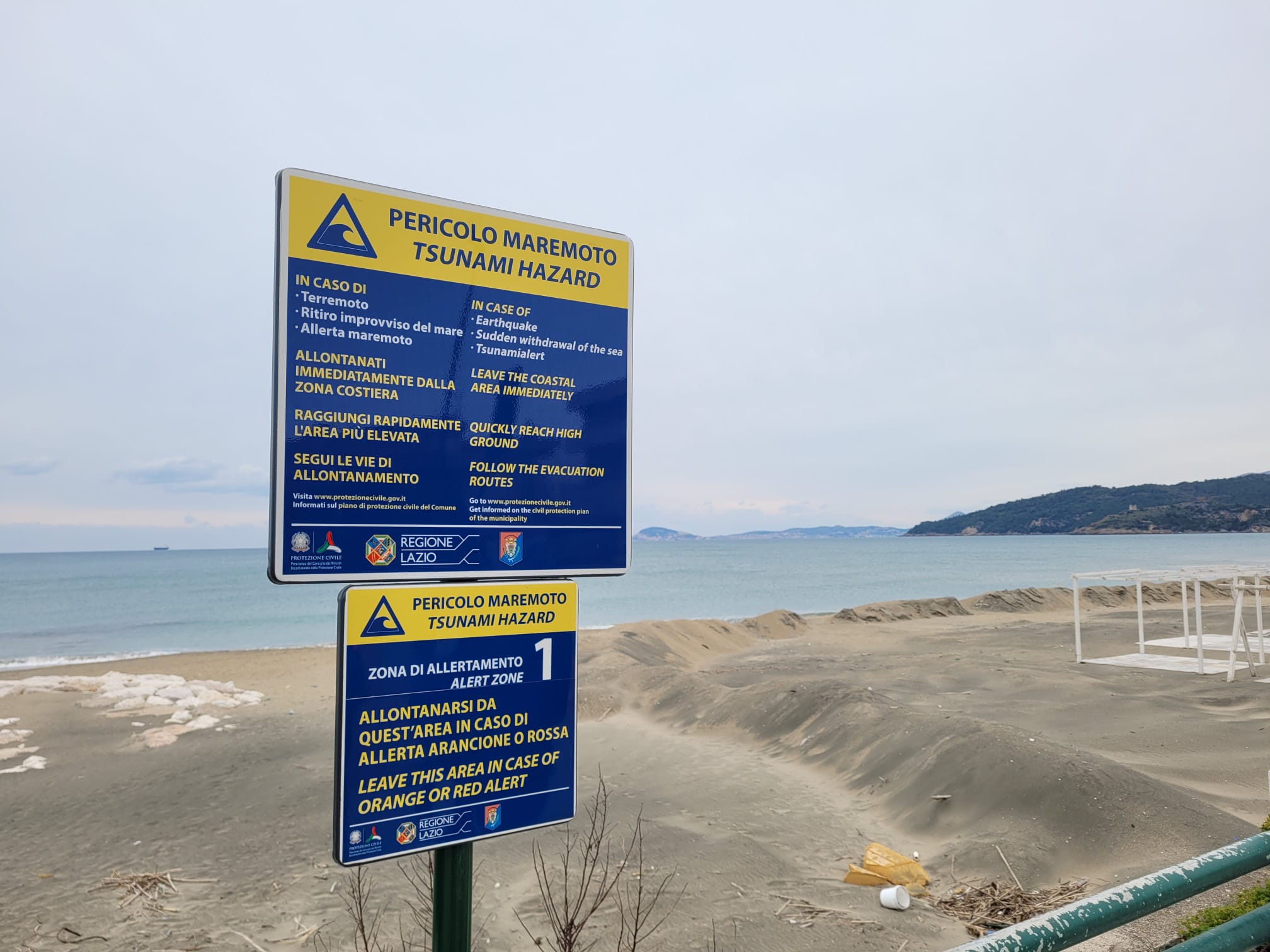

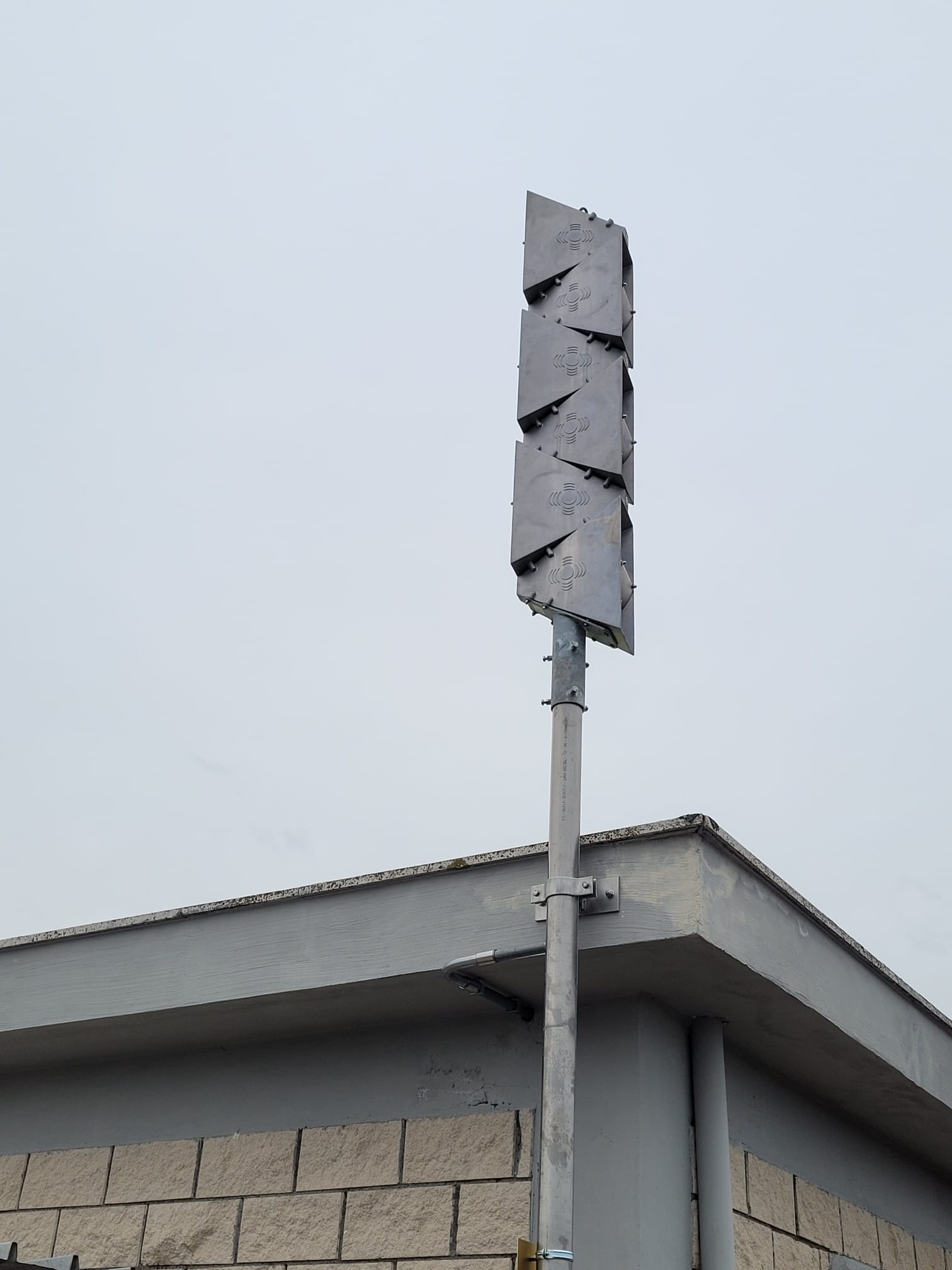
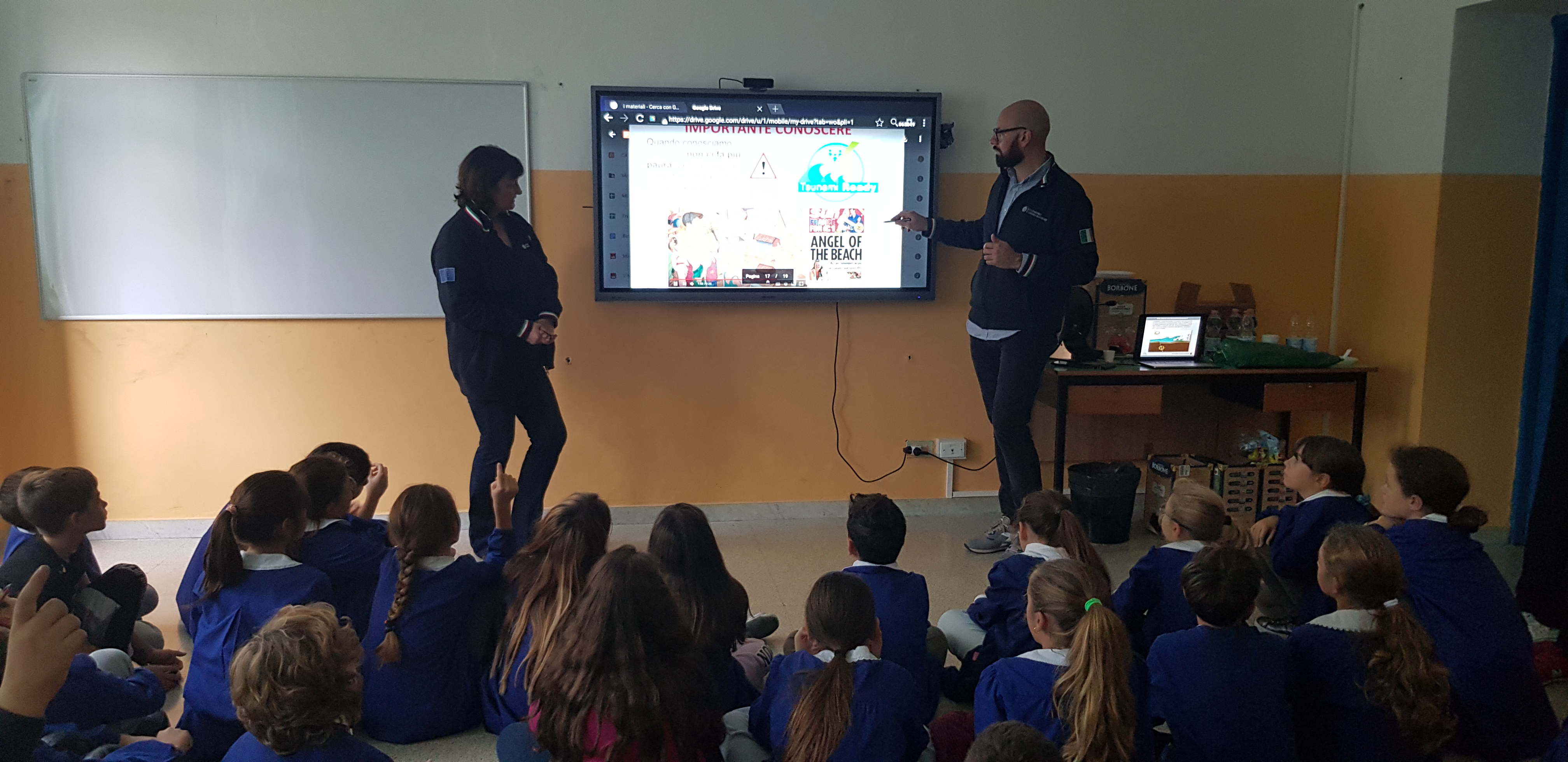
 Some representative images of the path carried out by the municipality of Minturno within the Tsunami Ready programme
Minturno, in the coastal stretch of central-west Italy, is the first Italian municipality to be recognised Tsunami Ready by the UNESCO Intergovernmental Oceanographic Commission (UNESCO-IOC).
On Friday morning, 25 October, a ceremony to confer the title and documentation was held in the presence of the Mayor of Minturno Gerardo Stefanelli and the vice-mayor Elisa Venturo, the coordinator of the municipal Civil Protection group Michele Camerota, and Dr. Dario Mongelli, curator of the Tsunami Ready project in the area. The recognition was handed over by Dr. Denis Chang Seng, secretary of the IOC-UNESCO for the NEAMTWS area, and a SiAM representation composed of the Italian Civil Protection Department, the INGV Tsunami Alert Centre and the Institute for Environmental Protection and Research (ISPRA).
Tsunami Ready is a voluntary community recognition programme aimed at promoting tsunami risk preparedness as an active collaboration between government emergency management organisations, local governments and citizens. The main objective of the programme is to improve public safety before, during and after tsunami emergencies.
The accreditation process of the Municipality of Minturno began in July 2020. Italy, with Minturno Municipality, was the first country in the Euro-Mediterranean area (NEAMTWS) to adopt the programme that fosters synergy between the parties involved, starting from the institutional sphere to the territorial authorities responsible for managing and safeguarding the territory, to the Civil Protection (at various levels) up to the involvement of local operators (owners of tourist facilities and coastal services) and stakeholders.
In the course of the four years, as provided by the twelve indicators that make up the programme, various interventions have been promoted and completed in the territory, starting from the tsunami risk assessment for the coastal stretch and the consequent identification of coastal inundation areas to preparedness interventions that involved the various levels (institutional up to the last mile coverage, i.e. the citizens) up to the preparation and verification of warning systems and dissemination of alert messages.
The process was as challenging as it was engaging. Among the highlights, we would like to mention the various meetings held at the headquarters of the Municipality of Minturno and the local Civil Protection, the ‘table top’ tsunami risk drills, shared at European and national level; the vertical evacuation tests activated with the contribution of local bodies in different school complexes and, subsequently, the dissemination and dialogue meetings with students to frame the actions within a cultural framework of tsunami risk mitigation. Last but not least, the testing of public sirens installed by the municipal council and civil protection in suitable coastal areas and the installation of vertical signs (see photo).
The path led by the Minturno municipality is exemplary, an index of organisation, cohesion between the parties and awareness towards reducing natural hazards. This virtuous path is part of a multi-hazard awareness-raising framework with an eye on climate change. Each Tsunami Ready indicator achieved is a piece of resilience given to the community.